

The Burrow

Feb 27, 2026
Completing DIY projects yourself can be a great way to save some money. Not only can you cut down on costs, but you can also avoid having any contractors in your home and enjoy more control over customising your living spaces exactly as you like.
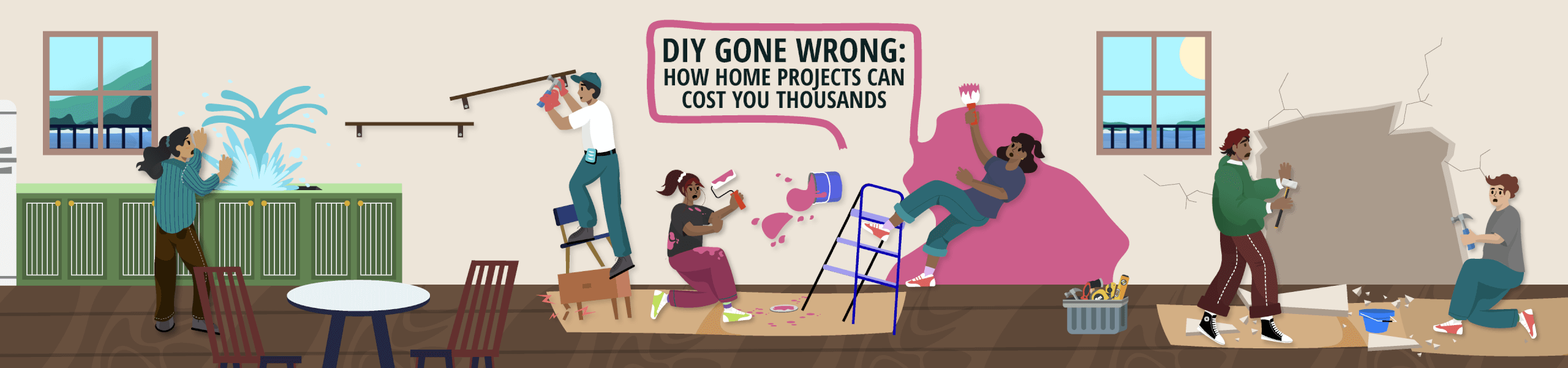
But while there may be upsides to going down this route, it doesn’t always go according to plan and mistakes or accidents can happen. Should this be the case, repairing these issues can not only be a hassle, but also costly.
As experts in home and contents insurance comparison, Compare the Market surveyed Australian and U.S. residents to determine how the frequency and average cost of DIY failures compares to the potential financial benefits from successful projects.
Read on to learn about the U.S. and Australia’s most common types of DIY, the cost of project failures, the savings that can be made, and an overview of how DIY projects tend to pan out for residents.
In order to determine these rankings in the U.S. and Australia, Compare the Market surveyed 750 homeowners who have attempted a DIY project in the last two years.
Here are the key findings as a result of the survey. Below, we break down the highlights, focusing on how each country fares financially with its projects, frequent issues that crop up, and the most popular forms of DIY.
Looking at the United States, the most prevalent types of DIY projects are painting and plumbing. This includes 65% who did their own painting and 40% who worked on their own plumbing.
At first glance, these tasks can seem harmless and among the simpler jobs you can complete yourself, but it doesn’t mean that they always go smoothly. This is shown by 29% of total U.S. respondents reporting that they needed the help of professionals to rectify mistakes they’d made.
Common DIY failures were water leaks and poor finishes, with nearly half of respondents (44%) stating they had leakage problems and 36% stating their work ended up having an inadequate finish.
These errors have led to residents incurring high costs when hiring professionals to make repairs. On average, the price of fixing failed projects was a staggering US$2,277.97, with male respondents’ costs reaching US$2,486.70 and females spending an average of US$1,877.55.
Fees like this aren’t small and are certainly not something many can afford to spend on a regular basis. Though women in the U.S. said they ended up saving an average of US$1,400 on DIY projects, they’re also paying more than US$1,800 to rectify failures, meaning it isn’t always a sustainable practice.
The average savings in the U.S. as a whole are a little higher, though, with US$1,629.50 being saved by homeowners. Notably, males save a little over US$1,700, though this still doesn’t outweigh their DIY failure repairs which cost north of US$2,400.
So, it appears as if DIY disasters happen frequently enough in the U.S. for projects to become a pretty costly endeavour for many.
Viewing how Australia fares with its DIY projects paints a somewhat similar picture. Like the U.S., painting projects are common, with 63% of respondents claiming this, alongside just over a third (37%) of people tiling or renovating their bathrooms.
As 38% of Australian DIYers reported disasters, it’s not uncommon for professional help to be required. With almost every other person (47%) stating they’d had issues with water leaks and 36% saying they’d experienced poor finishes following their projects, Australia reflects a similar pattern to the U.S.
These mistakes cost Australians an average of AU$2,315.79 to fix. The average repair bill for male respondents is AU$2,174.11 and female respondents average around AU$2,519.23. This again demonstrates the substantial financial impact that can be incurred from DIY projects, emphasising the risks that must be considered beforehand.
It should be noted that costs can be saved as well, though, with an average of AU$1,773.00 being made in savings. Proportionately, Australian residents also appear to save more than U.S. residents, with males saving an average of AU$1,683.87, while females saved more at AU$1,918.42. However, these savings are again outweighed by the costs of repairing DIY failures.
Like with the U.S., it looks like DIYers in Australia should also be aware of the possible risks that come with completing home projects themselves rather than looking towards professionals for assistance.
Looking at the whole picture, DIY projects appear to provide a level of satisfaction and cut the costs of completing home projects. The risk must be considered, though, with the chances of failure being fairly high and repair costs often being expensive.
What may appear to be simpler tasks that you’re able to complete yourself can turn out to be bigger than initially anticipated. Water leaks, poor finishes, and various other issues that crop up can soon become pricey problems, but they can be avoided if you have the right precautions in place.
Executive General Manager of General Insurance, Adrian Taylor, says that home and contents insurance can help protect households if something goes wrong.
“DIY can be a great way to save money and personalise your space, but it’s important to recognise when a project is beyond your skill level. The cost of mistakes can quickly add up, and in many cases, professional help is necessary to rectify errors.
“If you’re taking on a DIY project, consider reviewing your home and contents insurance to understand what protection you have against unexpected damages, especially when embarking on more ambitious projects.
“It’s important to note, however, that many insurers will not offer cover for faulty DIY jobs or work completed by amateurs, because defective or poor workmanship is often excluded. That’s why taking the time to compare policies and read the Product Disclosure Statement helps to make sure you are covered.”
Prior to purchasing any policy, ensure that you read the Product Disclosure Statement (PDS) and Target Market Determination (TMD) so that you’re aware of any limits, inclusions, or restrictions.
Compare the Market commissioned 3Gem to survey 250 Australian and 500 U.S. homeowners who have attempted a DIY project in the last 2 years. Participants were required to be aged 18+ and situated in the U.S. or Australia, with the survey being conducted in January 2026.