

The Burrow

Feb 18, 2026
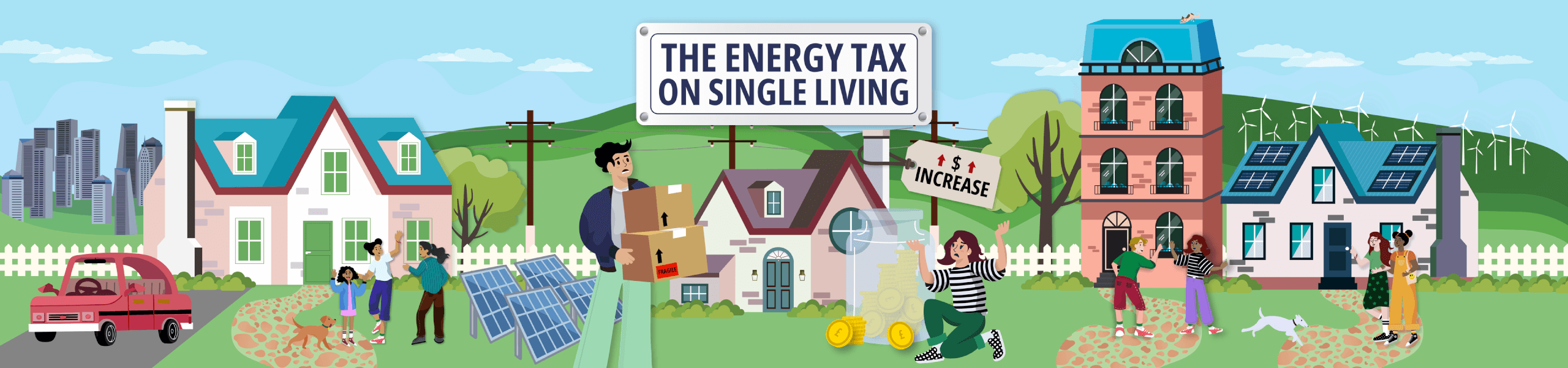
Living solo is often seen as a mark of independence, but it can come with a hidden financial penalty. From rent and groceries to heating, cooling and lighting, living alone means shouldering the full weight of household bills without anyone to share the load. Unlike shared living, where costs can be split among multiple people, those who live alone pay the same standing charges and usage fees for essentials, such as electricity and gas bills. This often results in disproportionately higher energy costs.
This phenomenon is often referred to as the “singles tax”, the extra financial burden placed on people who live alone. To find out more, the energy comparison experts at Compare the Market explored how living solo impacts household finances in both the US and Australia.
By comparing the true cost of living alone with that of shared living, this campaign highlights how single-person households are affected by higher energy costs, reduced savings potential, and greater exposure to rising household bills. Now, let’s take a look at the true cost of living alone.
In the United States, the data highlights how the singles tax plays out in real terms for people living alone, particularly for energy costs.
Nearly a quarter (23%) of respondents report spending between USD$100 and $149 per month on electricity bills and other energy use. However, the average monthly energy spend rises significantly, reaching $176.38. Over the course of a year, this equates to approximately $2,116 in annual energy costs for the average American household. For single-person households, this reinforces how living alone often leads to higher per-person costs, as standing charges and baseline usage aren’t reduced simply because fewer people live in the property.
Rising costs are clearly influencing behaviour. Almost half (44%) of US respondents have considered reducing their energy usage due to affordability concerns. Meanwhile, 23% say they have relied on credit cards to cover household bills, a sign that energy spending is placing real strain on monthly finances. Reflecting the appeal of shared living, 47% of those living alone have considered moving in with others specifically to reduce energy costs.
Thirty-four per cent of respondents estimate that sharing living expenses could save them $20-49 per month, underlining the financial advantage of splitting utilities rather than facing the singles tax, whereas 17% estimate it could be up to $149.
Despite these pressures, most US households are actively trying to manage their energy bills. The most common action is turning off lights when not in use, reported by 84% of respondents. A further 68% adjust thermostats or settings to control heating and cooling costs. In addition, 49% run appliances such as dishwashers and washing machines only when full to minimise consumption.
Almost half (45%) say they use energy-efficient appliances, showing a growing preference for longer-term, more sustainable solutions to managing energy costs. Also, 23% report cooking less frequently or cooking in bulk to reduce energy use in the kitchen.
Together, these findings show how living alone in the United States often means higher outgoings, greater financial pressure, and a stronger incentive to consider shared living as a way to manage the true cost of household bills.
In Australia, the data shows how the singles tax affects those living alone, with higher energy costs placing pressure on monthly budgets.
When it comes to monthly energy spend, 30% of respondents report paying between AUD$100 and $149 per month on electricity bills and other energy usage, with the average household spend sitting at $156.43. That means the average single Australian spends around $1,877 per year on energy alone, or roughly $36 per week to keep their home powered.
Affordability concerns are widespread. Almost half (49%) of respondents say they have considered reducing their energy usage due to rising costs, while 22% have used credit cards to cover household bills. The financial incentive to share costs is also clear, as 42% of Australians living alone have considered sharing a household to reduce energy costs.
On average, respondents estimate that moving in with another person could save them $50-99 per month, reinforcing how shared living can significantly soften the financial impact. On average, this equates to approximately $836 in potential savings annually through shared living.
Australian households are actively adapting their behaviour to manage energy costs. Turning off lights when not in use is the most common action, reported by 83% of respondents. Notably, 69% say they air-dry their clothes rather than use a tumble dryer. This is a major energy-saving habit and far more common in Australia than in the United States.
More than half (55%) run appliances such as washing machines and dishwashers only when full, showing a strong focus on efficient usage. Meanwhile, 43% use energy-efficient appliances, slightly lower than the US figure but still a significant proportion. Behavioural changes also extend to home comfort and cooking habits, with 34% adjusting thermostats or heating settings and 30% cooking less frequently or in bulk to reduce energy use.
The findings make it clear that while Australians living alone are proactive in managing electricity bills, the underlying cost pressures remain. As a result, shared living is becoming an increasingly attractive way to manage rising household bills.
Rising energy costs mean the singles tax can hit harder for those living alone, making it even more important to ensure you aren’t paying too much. Choosing suitable shared living arrangements can help, but for many households, reviewing plans is a more practical first step.
Comparing options can help you manage electricity bills, reduce unnecessary spending, and bring greater predictability to monthly costs.
Meredith O’Brien, Head of Energy at Compare the Market Australia, says:
“Living alone means you’re responsible for every dollar of your energy use, which can make price rises feel especially sharp.
“Taking the time to review your energy plan and compare what’s available could uncover savings that might otherwise have been missed. Combined with small changes in daily energy usage habits, it’s a simple way to regain control over rising household costs.”
Compare the Market commissioned 3Gem to run two surveys with individuals responsible for paying electricity/gas bills in their households. All respondents were aged 18+ years old. The US sample was 500 people, and the Australia sample 250 people. All research was conducted in January 2026.