

The Private Health Insurance premium increase 2026
Do you keep track of rate rises from year to year? Give us a call and we’ll see if we can find you a better deal in just a few minutes
- Australian owned and operated call centre
- Speak to an expert right away
- A quick call could save weeks of research


Expert tips on what to do about your rate rise
Our health insurance expert, Steven Spicer, has these tips on what to do after your health fund gets in touch about your rate increase.

Steven Spicer
Executive General Manager – Health, Life & Energy
Review your policy
See if it still fits your needs, budget and lifestyle. If you haven’t done this in a while, you might find that your current private health insurance policy is no longer right for you.
Reconsider the services you need
Hospital cover policies bundle different procedures into product tiers (Basic, Bronze, Silver and Gold). This means you might be paying more for expensive services you don’t need (e.g. birth-related services).
Update your cover
Has your life changed since you took out your current policy? Are you planning on having a family? Or maybe you’ve recently suffered a health scare? Whatever it may be, switching to a new policy could make the difference in safeguarding your future health and saving you money.
What is the health insurance rate rise?
In Australia, health insurance premiums will rise an average of 4.41% on 1 April 2026, the highest price hike since 2017. This is a government-approved overall industry average. Individual health funds and specific policies vary in the extent of their premium rises.
Premium rises may mean you pay more for your health insurance, with the exact amount depending on your health fund and policy. For example, if you have a hospital policy that currently costs $2,641 per year, a 4.41% increase would add an extra $116 to your premiums.1 If your premiums are increasing more than the average, you may be able to find a better deal elsewhere and switch policies.
There are a variety of reasons premium rises happen, including:
- Rising health care costs: This includes staff wages, doctor/specialist fees, advancing technology and more complex procedures.
- Increased use of services: More people are accessing healthcare, and more expensive treatments are being performed.
- Hospital funding: Whenever changes are made to hospital funding, this can affect premium rises.
About the rate rise
What are the benefits of health insurance if my premiums keep rising?

Even with the rate rise, private health insurance remains as valuable as ever, with benefits including:
- Avoiding public hospital waiting lists for elective surgeries
- Your choice of doctor if available
- Great-value extras.
Plus, you’ll have peace of mind that if something goes wrong for you or your family, you’ll be well-positioned to get the health care you need as fast as possible.
You should regularly review your policy and compare options to make sure it’s a good fit for your personal needs and circumstances.
How will I know if my premium is changing?
You’ll be notified of your private health insurance premium increase by your health fund via post or email. This way, you can check over any updated policy information and make an informed decision about what to do next. While funds traditionally increase their premiums on 1 April each year, some funds delayed their rate rise until later in the year during the Covid-19 pandemic.
How much will my premiums rise?
Though the industry average rate rise is 4.41%, your specific policy may have a higher or lower increase.
| Potential premium adjustments | ||
|---|---|---|
| Policy type | Average policy cost * | +4.41% |
| Hospital cover | $2,641 | $116 |
| Extras cover | $839 | $37 |
| Hospital and extras cover | $3,560 | $156 |
| *Average based on all private health insurance policies purchased via Compare the Market between 1 January and 30 November 2025. These figures include rebates and age-based discounts as well as lifetime health cover loading where applicable. | ||
Do premiums keep rising over time?
This graph shows the premium increase each year for the last decade:
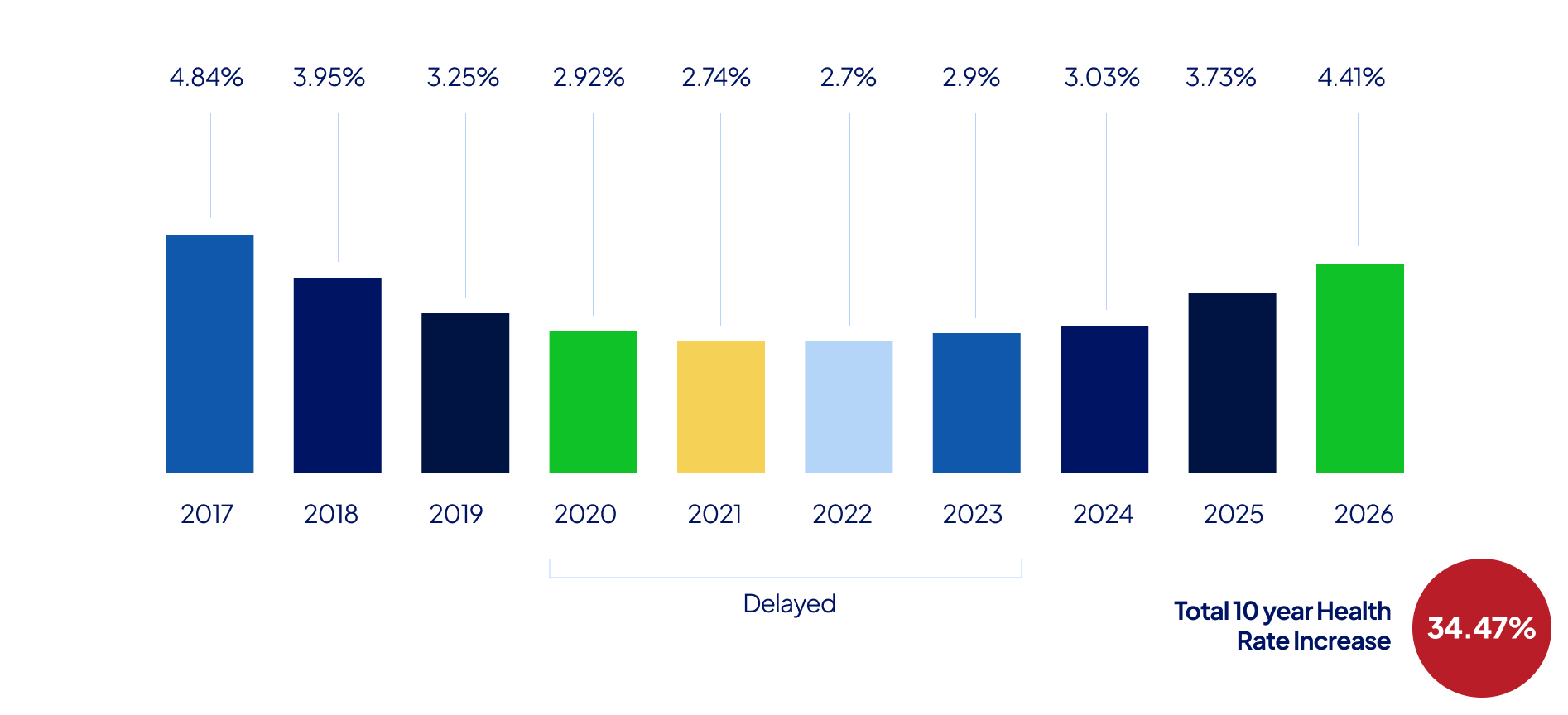
Over the last decade, the overall industry average for health insurance premiums has risen each year. This means the average for premiums has gone up nearly 35% from ten years ago. Usually, premiums will increase on 1 April each year. There are a variety of reasons for premiums increasing, including:
- Rising treatment costs
- Australia’s aging population
- Increase in complex surgeries
- Increases in doctor/specialist fees
- Wage increase for health workers
- Higher costs for medical technology
How are the health insurance rate rises determined?
Before health funds can raise their premiums, they must submit their proposed price increases to the Australian Government and the Australian Prudential Regulation Authority (APRA) for approval. The federal government checks all submissions to ensure they’re sustainable, fair and necessary.
Some factors that lead to rate rises include:
- Increased health care costs (including doctors’ and hospital charges)
- An increase in the cost of medical equipment and changing technology
- The growing number of complex and expensive procedures available in private hospitals
- The rate of private health insurance claims.
As the health insurance premium rate rise is a weighted average, some health funds increase their prices more than others.
This weighted average is based on changes to a health fund’s entire portfolio of policies; this means the cost of some policies may increase substantially, some may increase slightly, some may not increase at all, and some could even decrease.
These proposed changes are reviewed, and if the insurer can’t sufficiently justify why they need to increase their premiums, the proposal will be rejected.
Average rate rise per fund
Below is the average rate rise for each health fund in 2026. Keep in mind this is the average increase across all policies offered by the health fund; not all policies will be increased by this amount, if at all.
| Health fund | Average 2026 rate rise |
|---|---|
| ACA Health Benefits Fund Limited | 4.48% |
| AIA Health Insurance | 5.98% |
| Australian Unity Health Limited | 3.98% |
| BUPA HI Pty Ltd | 4.80% |
| CBHS Corporate Health Pty Ltd | 3.25% |
| CBHS Health Fund Limited | 3.25% |
| Defence Health Limited | 2.99% |
| Doctors’ Health Fund Pty Ltd | 3.67% |
| GMHBA Limited | 1.98% |
| HBF Health Limited | 2.15% |
| Health Care Insurance Ltd | 4.53% |
| Health Insurance Fund of Australia Limited | 2.60% |
| Health Partners Limited | 3.94% |
| Hospitals Contribution Fund of Australia Ltd | 4.96% |
| Hunter Health Insurance* | 3.92% |
| Latrobe Health Services Limited | 4.53% |
| Medibank Private Limited (AHM) | 5.10% |
| Mildura District Hospital Fund Ltd | 4.25% |
| National Health Benefits Australia Pty Ltd | 2.96% |
| Navy Health Ltd | 2.88% |
| NIB Health Funds Ltd | 5.47% |
| Peoplecare Health Limited | 4.01% |
| Phoenix Health Fund Limited | 2.95% |
| Police Health Limited | 2.53% |
| Reserve Bank Health Society Ltd | 4.13% |
| St Luke’s Medical and Hospital Benefits Association | 4.25% |
| Teachers Federation Health Ltd | 3.94% |
| Westfund Limited | 3.26% |
|
Source: health.gov.au |
|
Meet our health insurance expert, Steven Spicer
As the Executive General Manager of Health, Life and Energy, Steven Spicer is a strong believer in the benefits of private cover and knows just how valuable the peace of mind that comes with cover can be. He is passionate about demystifying the health insurance industry and advocates for the benefits of comparison when it comes to saving money on your premiums.
Want to know more about health insurance?
1 Compare the Market – What a 4-5% health insurance hike could mean for your wallet. Accessed January 2026.
Talk to an expert
At a time that suits you
Call now