

Stamp duty calculator SA



Stamp duty and how it works
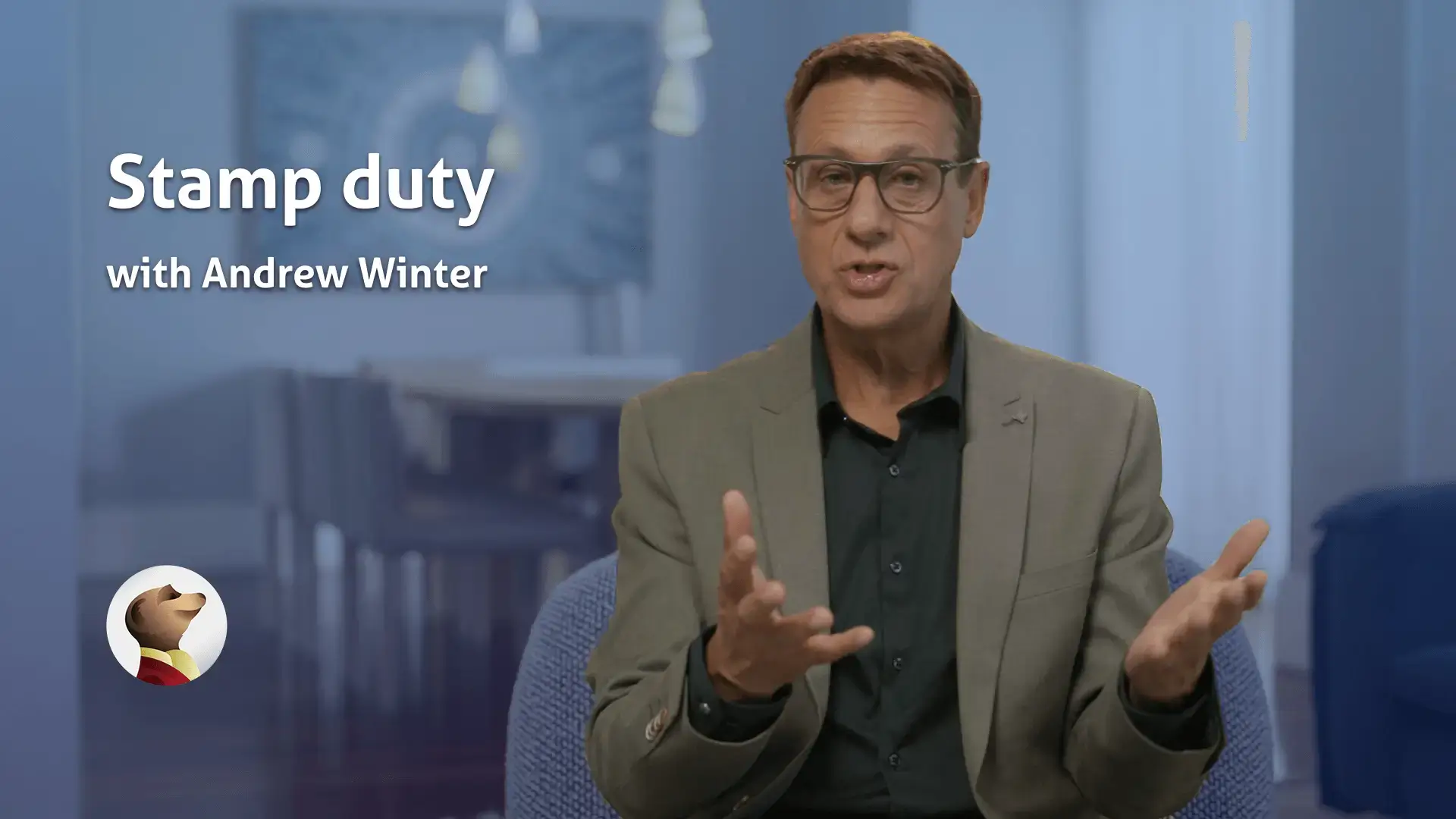
Don’t quite understand stamp duty? You might want to watch this explainer from Selling Houses Australia host, Andrew Winter.

Andrew Winter
Home Loans

Video Transcript
Hi, I’m Andrew Winter, host of Selling Houses Australia.
As someone who’s no stranger to the homebuying process, I’m well aware of what kinds of costs
I’ll have to deal with if I buy a property. But there are plenty of homebuying costs that
can catch first home buyers unawares, and the largest of these will typically be your transfer
duty – or ‘stamp duty’ as it’s often called. Stamp duty is a government tax that’s charged
whenever legal ownership of a property is transferred between two parties as part of a sale.
It’ll often cost the buyer – that’s you! – thousands, or even tens of thousands of dollars,
so it’s definitely a cost worth keeping in mind, and budgeting generously for.
Now, each state and territory charges different amounts of stamp duty on
different property value thresholds. So, you’ll need to make sure you’ve
looked at the specific rates and thresholds for where you live, to get an accurate idea
of what your stamp duty bill could look like. When it comes time to pay your stamp duty
which will usually be at settlement – you’ll typically be paying it completely out of pocket. Ouch.
The only exceptions I’d point out would be first home buyers, who are often eligible
for some sort of stamp duty discount or exemption. But even those aren’t guaranteed – you’ll need to
check what’s on offer in your state or territory, as well as with your conveyancer in order to
figure out the applicable government fees. Luckily, Compare the Market can help you
both understand how stamp duty is charged where you live, and then calculate your
payable stamp duty once you’re ready to buy. Their home loan comparison tool lets you specify
the property you’d like to buy, along with what you’re planning on using it for and your
particular buying circumstances, and then tells you how much stamp duty you’d pay on the purchase.
So, whether you’re a first home buyer or a seasoned property expert, Compare the Market
can help you with your next property journey – they make it as easy as comparing home loans.
Our SA stamp duty calculator
Expert tips for stamp duty in SA
Unless they’re a first home buyer, property-buyers in South Australia don’t have access to any concessions or exemptions like those on offer in other states and territories. This makes it crucial that they know exactly how much stamp duty they need to budget for, as it’ll likely be a major cost. With that in mind, our General Manager for Money, Stephen Zeller has the following tips:

Stephen Zeller
General Manager – Money
Calculate your stamp duty correctly
Stamp duty fees differ depending on which state or territory in Australia you’re looking to buy in. When working out the estimated stamp duty for a new or established home you’re looking to purchase, double check to make sure you’re estimating the right amount for the correct state/territory.
Factor stamp duty into your homebuying costs
Stamp duty can sometimes be forgotten about when looking at your dream home and totalling up your homebuying costs. When looking at the purchase price, factor in the stamp duty premium as well, as you may be disappointed later down the road if you don’t have enough funds to purchase the property.
We’re here to help!
Our expert Home Loan Specialists are here to help. They can be contacted via phone or email to assist you with any queries regarding how much stamp duty you may need to pay purchasing a home in SA.
How is stamp duty calculated in SA?
What are the stamp duty rates in SA?
Stamp duty in South Australia is charged on a sliding scale. The minimum stamp duty you may be required to pay increases in relation to the dutiable value of the property being transferred into your name.
The current general SA stamp duty rates (as of February 2024) are listed in the table below:¹
| Dutiable value of the property | Stamp duty payable |
|---|---|
| $12,000 or less | $1.00 for every whole or part $100 |
| $12,001-$30,000 | $120, plus $2.00 for every whole or part $100 over $12,000 |
| $30,001-$50,000 | $480, plus $3.00 for every whole or part $100 over $30,000 |
| $50,001-$100,000 | $1,080, plus $3.50 for every whole or part $100 over $50,000 |
| $100,001-$200,000 | $2,830, plus $4.00 for every whole or part $100 over $100,000 |
| $200,001-$250,000 | $6,830, plus $4.25 for every whole or part $100 over $200,000 |
| $250,001-$300,000 | $8,955, plus $4.75 for every whole or part $100 over $250,000 |
| $300,001-$500,000 | $11,330, plus $5.00 for every whole or part $100 over $300,000 |
| $500,001 or more | $21,330, plus $5.50 for every whole or part $100 over $500,000 |
As an example, say you purchase a property in Adelaide for $400,000; you’d pay $11,330 as well as $5 for every $100 or part of $100 between $300,000 and $400,000.
Dividing $100,000 (the difference between the two figures) by $100 gives us 1,000; multiply that by $5 and we have $5,000. Adding that to the initial $11,330 means you’d be looking at $16,330 in stamp duty on your property purchase.
Keep in mind that these calculations are merely an example and don’t take any extenuating circumstances into account. Consider speaking to your conveyancer or solicitor if you’d like an accurate estimate of your payable stamp duty on a given property transfer.
It’s also important to note that the costs associated with buying a home don’t end there, and you may also have to pay for things like:
- Conveyancing
- Building and pest inspections
- Mortgage application fees
- Lender’s mortgage insurance, which may apply if your loan-to-value ratio (LVR) is lower than 80, meaning your deposit is less than 20% of the total property value
- Any other applicable upfront costs or government fees
What property types does stamp duty apply to in SA?
In South Australia, all transfers of residential and primary production land are considered ‘dutiable’ (i.e. subject to stamp duty) by RevenueSA. This includes:
- House and land packages
- Apartments
- Townhouses
- Vacant land.
For stamp duty purposes, residential land is land intended to be used as the buyer’s primary residence, while primary production land is land being used to conduct the business of agriculture, pasturage and horticulture, among other potential purposes.²
Be sure to do your research or speak to your conveyancer or solicitor to check whether your property transaction will be considered dutiable by the South Australian state revenue office.
When is stamp duty payable in SA?
Stamp duty is calculated on the property’s settlement date in South Australia based on which was higher: its final purchase price or its market value. It must then be paid before the purchaser can be registered as the owner on the Certificate of Title.3
Who pays stamp duty in SA?
Are there any stamp duty concessions or exemptions in SA?
Unlike the rest of the country, prospective homebuyers in South Australia do not have access to any stamp duty concessions or exemptions unless they’re a first home buyer – in which case, they may be eligible for a duty exemption or concession.
Do first home buyers pay stamp duty in SA?
 As of 15 June 2023, eligible first home buyers will pay no stamp duty on the purchase of new homes worth less than $650,000, and vacant land worth less than $400,000. They will pay a reduced amount of stamp duty on the purchase of new homes worth less than $700,000, and vacant land worth less than $450,000.4
In order to be eligible for a stamp duty concession or exemption in SA, at least one applicant must be:
- An Australian citizen or permanent resident, or a New Zealand citizen permanently residing in Australia with a Special Category Visa.
- At least 18 years of age
- An individual person (i.e. not a company or trust).
Additionally, no applicant may have:
- Previously occupied an Australian residential property in which they had a financial interest for six months or longer
- Previously received a stamp duty concession as a first home buyer in any state or territory of Australia.
Furthermore, at least one applicant must use the home as their primary residence for at least six months continuously, commencing within 12 months of the settlement date.
Do foreign purchasers pay stamp duty in SA?
Foreign buyers looking to acquire residential property in South Australia (or an interest in such) are required to pay both standard stamp duty and a 7% foreign ownership surcharge.5
Meet our home loans expert, Stephen Zeller
Stephen has more than 30 years of experience in the financial services industry and holds a Certificate IV in Finance and Mortgage Broking. He’s also a member of both the Australian and New Zealand Institute of Insurance and Finance (ANZIIF) and the Mortgage and Finance Association of Australia (MFAA).
Stephen leads our team of Mortgage Brokers, and reviews and contributes to Compare the Market’s banking-related content to ensure it’s as helpful and empowering as possible for our readers.
1 RevenueSA. Rates of stamp duty. 2024.
2 RevenueSA. Exemption where you use the land for primary production. 2024.
3 RevenueSA. First Home Buyer. 2024.
4 Revenue SA. Stamp Duty Relief for Eligible First Home Buyers. 2024.
5 RevenueSA. Foreign Ownership Surcharge. 2024.