
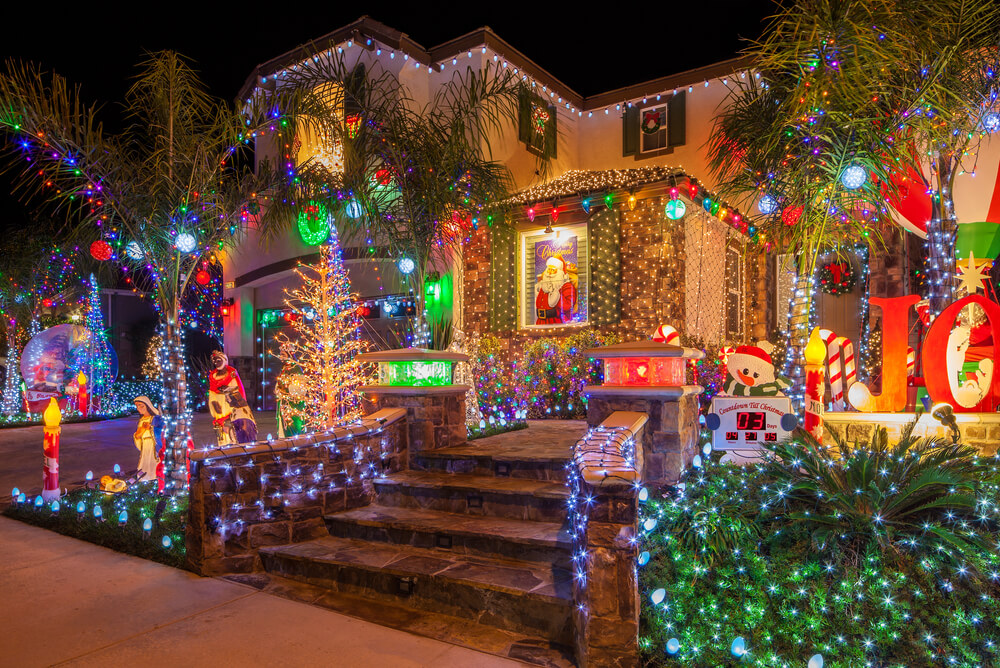
It’s a beloved Christmas tradition that will become a thing of the past for many in 2025, with 59.4% of Australians surveyed by Compare the Market revealing they won’t be hanging Christmas lights this year.*
However, cost shouldn’t be a barrier to hanging fairy lights during the festive period, with new analysis from Compare the Market revealing that hanging as many as 700 LED lights could cost as little as $1 per night or less than $35 for the month of December in some regions.
NSW
| Type | Number of lights | Wattage | Estimated cents per hour | Estimated cents per night | Estimated cost month of December |
| Low Voltage 25 LED Star String Lights – Assorted | 25 | 1.35 | $0.05 | $0.21 | $6.36 |
| 100 LED Fairy Lights – White (Gn Wire) | 100 | 3.6 | $0.14 | $0.55 | $16.96 |
| 30M 500 LED Soft White Fairy Lights with 8 Functions (Green Wire) | 500 | 6 | $0.23 | $0.91 | $28.27 |
| 700 LED Berry Fairy Lights | 700 | 6.6 | $.25 | $1.00 | $31.10 |
Source: Compare the Market
VIC
| Type | Number of lights | Wattage | Estimated cents per hour | Estimated cents per night | Estimated cost month of December |
| Low Voltage 25 LED Star String Lights – Assorted | 25 | 1.35 | $0.04 | $0.18 | $5.52 |
| 100 LED Fairy Lights – White (Gn Wire) | 100 | 3.6 | $0.12 | $0.48 | $14.73 |
| 30M 500 LED Soft White Fairy Lights with 8 Functions (Green Wire) | 500 | 6 | $0.20 | $0.79 | $24.55 |
| 700 LED Berry Fairy Lights | 700 | 6.6 | $0.22 | $0.87 | $27.01 |
Source: Compare the Market
QLD
| Type | Number of lights | Wattage | Estimated cents per hour | Estimated cents per night | Estimated cost month of December |
| Low Voltage 25 LED Star String Lights – Assorted | 25 | 1.35 | $0.05 | $0.19 | $6.03 |
| 100 LED Fairy Lights – White (Gn Wire) | 100 | 3.6 | $0.13 | $0.52 | $16.07 |
| 30M 500 LED Soft White Fairy Lights with 8 Functions (Green Wire) | 500 | 6 | $0.22 | $0.86 | $26.78 |
| 700 LED Berry Fairy Lights | 700 | 6.6 | $0.24 | $0.95 | $29.46 |
Source: Compare the Market
SA
| Type | Number of lights | Wattage | Estimated cents per hour | Estimated cents per night | Estimated cost month of December |
| Low Voltage 25 LED Star String Lights – Assorted | 25 | 1.35 | $0.061 | $0.24 | $7.44 |
| 100 LED Fairy Lights – White (Gn Wire) | 100 | 3.6 | $0.162 | $0.65 | $20.09 |
| 30M 500 LED Soft White Fairy Lights with 8 Functions (Green Wire) | 500 | 6 | $0.270 | $1.08 | $33.48 |
| 700 LED Berry Fairy Lights | 700 | 6.6 | $0.297 | $1.19 | $36.83 |
Source: Compare the Market
**Methodology at end of release
Compare the Market’s research found that while 44.8% of Australians surveyed said they never hang Christmas lights, 7.9% said they would be switching off in 2025 because they can’t afford it and 14% said they would hang a smaller number of lights to save money.
Compare the Market’s Head of Energy, Meredith O’Brien, said that high energy prices continue to be a budgeting pain point for many households, but there were other culprits contributing to bigger bills over the Christmas period.
“Australian households tend to see their bills surge in the summer, but despite what the Grinches in your life may tell you, Christmas lights aren’t the biggest bill blowers over the festive season,” Ms O’Brien said. “In fact, our new analysis shows that they may only increase your summer bill by a few dollars.
“Gone are the days of those energy-guzzling incandescent Christmas lights of the past, which used a whole lot more power than the LEDs and solar options available these days. If you plan on untangling your old incandescent lights from the garage to hang this year, you may want to invest in something more energy efficient.”
Compare the Market’s analysis found that 13.5% of respondents said they will use more energy-efficient lights or solar options this year – a smart move, according to Ms O’Brien.
“There’s an abundance of solar options available which don’t use any power from the grid at all, so you can spread Christmas cheer without the fear of a huge bill,” Ms O’Brien said. “LEDs are another cost-effective option, which usually have a cheap upfront cost and are surprisingly affordable to run.”
Ms O’Brien said it’s typically other things over the Christmas period that drive up power bills, including blasting the air conditioner, using the oven and stove to cook Christmas feasts, running pool pumps for longer and powering spare fridges and freezers.
“If you’re looking for ways to lower your summer energy bill, direct your attention to the bigger power guzzlers around the home,” Ms O’Brien said.
“Take the air conditioner, for example. Each degree colder you set the temperature can increase your electricity usage by as much as 10%. Instead, aim for somewhere between 25 and 27°C and ensure you’re closing windows and doors to lock the cool air in.
“Don’t leave appliances charging or on standby, as this so-called ‘vampire power’ can suck as much as $100 from your wallet every year. It’s one to be mindful of – especially if you’ve got a house full of kids who love their screen time.
“Even be wary of the spare fridge or freezer over Christmas, because they may not be as cost-effective as they once were to run. A fridge from the early 2000s that had a five-star energy rating would only rate between two or three energy stars by today’s standards.”
Ms O’Brien also said households should also be making the most of their solar panels if they have them.
“Solar can significantly reduce your electricity bills if you use your system correctly,” Ms O’Brien said. “Run high-energy appliances like dryers, washing machines and dishwashers during the day when your panels are generating power. Smart timers can also help automate this process, allowing you to set and forget.
“If you have a solar battery, you can store excess energy generated during the day and use it at night when your household demand is usually higher. It’s usually better value to use the power your solar system generates than to export it to the grid.
“And don’t forget to regularly compare your electricity plan to ensure you’re still on a competitive offer. Look out for the ‘better offer’ message on your bill and if it’s been a while since your last comparison, add it to your Christmas to-do list.”
*Survey of 1,004 Australian adults, conducted in October, 2025
** Per month cost estimated based on running lights for four hours per night, every night for 31 days of December.
NSW: Based on a house in Sydney (2000), assuming a flat rate electricity usage tariff of 38c/kWh (outlined on p29 of AEMC NSW – Residential Electricity Price Outlook).
VIC: Based on a house in Melbourne (3000), assuming a flat rate electricity usage tariff of 33/kWh (outlined on p32 of AEMC’s VIC – Residential Electricity Price Outlook)
QLD: Based on a house in Brisbane (4000), assuming a flat rate electricity usage tariff of 36c/kWh (outlined on p28 of AEMC QLD- Residential Electricity Price Outlook)
SA: Based on a house in Adelaide (5000), assuming a flat rate electricity usage tariff of 45c/kWh (outlined on p31 of AEMC’s SA – Residential Electricity Price Outlook)
For more information, please contact:
Phillip Portman | 0437 384 471 | [email protected]
Compare the Market is a comparison service that takes the hard work out of shopping around. We make it Simples for Australians to quickly and easily compare and buy insurance, energy, and home loans products from a range of providers. Our easy-to-use comparison tool helps you look for a range of products that may suit your needs and benefit your back pocket.