

Cheapest dog and cat breeds to insure


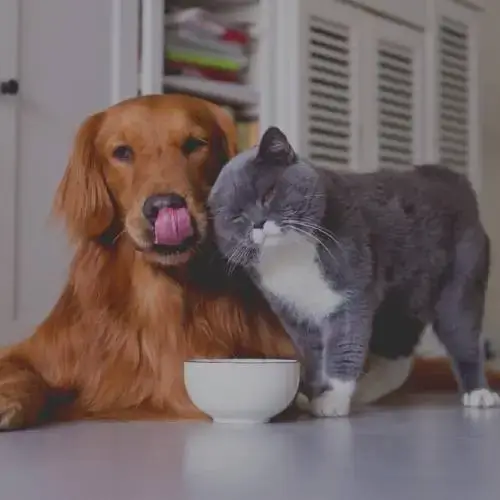


Cheapest dog breeds to insure in Australia
 Different breeds have different pet health risks, histories and lifespans, which insurers take into consideration when calculating the average cost of pet insurance premiums. Typically, breeds with fewer genetic health problems that are less prone to chronic conditions will have lower insurance premiums.
Generally ‘mongrels’ (a catch-all term to describe dogs of unknown parentage, mixed breeds or dogs that don’t fall within any definable breed category) can be cheaper to insure because there has been less inbreeding between pets with a similar genetic makeup as you may get with purebreds.
On the other hand, many conventional breeds, purebreds and ‘designer dogs’ have well-documented hereditary conditions, so know there are a number of conditions they’re more likely to require treatment for during their lifetime.
For example, larger breeds of dogs, such as Great Danes, Mastiffs, Newfoundlands, Poodles, and Bernese Mountain Dogs, tend to have higher insurance premiums because they are prone to hip and joint issues.1
This is why insurance premiums for purebred dogs are usually higher than for mixed-breed dogs.
Cheapest cat breeds to insure in Australia
 Different cat breeds have varying health risks, genetic predispositions, and lifespans, all of which insurers consider when calculating insurance premiums for cats. Generally, cat breeds with fewer hereditary health issues and lower susceptibility to chronic conditions tend to have lower insurance premiums.
Moggies or tabbys (terms often used to describe mixed-breed cats) are typically the most affordable cats to insure. Their diverse genetic makeup makes them less prone to inherited conditions that can affect purebred cats, reducing the likelihood of costly treatments over their lifetimes.
On the other hand, many purebred cats have well-documented genetic health concerns, which can increase premiums. This is why insurance for purebred cats is usually more expensive than for moggies. If keeping premiums low is a priority, choosing a mixed-breed cat is often the most cost-effective option.
What other factors affect the cost of pet insurance?
Pet insurance premiums can also be influenced by where you live, whether your pet is de-sexed, their gender, the level of cover and any optional extras you may choose.
Other factors influencing the cost of pet insurance include the pet’s size (e.g. small dogs or large dogs), activity level and potential risks associated with their behaviour. Smaller, more sedentary dog breeds such as Chihuahuas, Yorkshire Terriers, Bichon Frises, and Dachshunds tend to have lower premiums because they are less likely to be injured or to require emergency care than larger, more active dogs.
Additionally, pets prone to frequent health issues or requiring specialised care may attract higher premiums, regardless of breed. Your pet’s lifestyle and whether they’re primarily indoors or outdoors can also impact insurance costs. Ultimately, the cheapest pet insurance depends on the individual pet’s characteristics and health profile, not just its breed.
Because of the number of rating factors and the various approaches used by pet insurance companies, one of the best ways for pet owners to save money on insurance is to compare a range of policies. Using our comparison tool is a handy way to view multiple policies all in one place.
Which breeds are most expensive to insure?
Most expensive dog breeds to insure
Although there is no definitive ‘most expensive’ dog breed to insure, certain breeds may attract more expensive premiums due to a higher risk of medical claims. We’ve gathered data from our panel of insurers to identify the breeds that are the most expensive and cheapest to insure.
Dog breeds that top the CTM’s list for most expensive pet insurance include:
- Bull Mastiff
- Bulldogs
- Rottweiler
- Boxer
- Chinese Shar-Pei
- Doberman Pinscher
- Bernese Mountain Dog
- Greyhound
- Great Dane
Top dog health conditions with the highest cost per claim
- Brachycephalic Airway Obstruction Syndrome (BAOS)
- Cruciate Disease
- Mast Cell Tumour
- Elbow dysplasia
- Hip dysplasia.2
Cheapest dog breeds to insure
- Australian Kelpie
- Bordoodle
- Mini Groodle
- Cavoodle
- Australian Cobberdog
- Australian Shepherd Dog
- Golden Retriever
- Border Collie
Most expensive cat breeds to insure
Like with dogs, when it comes to cats, there is no definitive “most expensive” cat breed to insure, but certain breeds may experience higher insurance costs due to a greater risk of medical claims.
Cat breeds that top the CTM’s list for most expensive pet insurance cost include:
- Bombay
- Persian
- Turkish Angora
- Siamese Cross
- Burmese
- Bengal
- Scottish Fold
- Sphynx
Top cat health conditions with the highest cost per claim:
- Neoplasm Adrenal 3
- Lower Motor Neuron Disease
- Mass Lesion
- Lymphoma – Renal (kidney disease)
- Urolithiasis
Cheapest cat breeds to insure
- Oriental Shorthair
- Russian Blue Cross
- Ragdoll
- Devon Rex
- Siberian
- Domestic Cat
- Munchkin
- Tabby
How can I save on pet insurance?
Compare your options
If you’ve got your heart set on a particular breed as your furry friend, a slightly more expensive policy isn’t going to stop you, and nor should it! The benefits of choosing the right pet for your home far outweigh what any insurance policy costs. Plus, there are always a few ways to save on your policy. For example, look for pet insurance policies that offer first-time discounts or multi-pet discounts.
Our best advice is to get pet insurance quotes for different pet insurance products and pet insurance plans. There are a lot of differences between insurers, meaning that shopping around can yield serious savings. Compare pet insurance providers against one another to ensure your furry family member is covered by the best value policy possible.
Always read the policy terms on the Product Disclosure Statement (PDS) and the Target Market Determination (TMD) to ensure that you understand the level of cover and what’s excluded in the policy to help you decide which pet insurance plan suits your pet.
Insure when they’re young
Your pet’s age isn’t something you can control, especially if you adopt a rescue pet. However, it makes a difference when it comes to insuring your pet. Always try to get your fur baby covered as early as possible. Just like humans, pets become more susceptible to injuries and illnesses as they age. This is why your pet insurance your premiums will likely increase each year. Plus, if your pet develops a condition before they’re insured, it will likely be considered a pre-existing condition, and you won’t be able to claim treatment for it.
It’s also important to know you generally can’t take out a higher level of cover for older pets, like an accident and illness policy. That’s why taking out pet insurance early means your beloved pet can protected for life provided there’s no break in cover.
Choose the right type of policy
If you’re serious about saving on your pet insurance policy, the best place to start is with the type of cover you’ll need. As the most basic level of cover, accident-only insurance only covers your pet if they’re injured in an accident. Given the high price of some vet bills, this is the bare minimum cover required to protect your pet, especially as they age and get more prone to falls.
Accident and illness insurance will help cover a portion of the costs of accidents along with treatments for some illnesses and diseases, including cancer, skin conditions and infectious diseases. Keep in mind that most insurers won’t cover pre-existing medical conditions. Always check the PDS for all inclusions and exclusions.
Comprehensive insurance policies are also available for pet owners who want the most coverage out of a pet insurance policy, as they usually include accident and illness insurance, as well as routine care add-ons that cover vaccinations, annual health checks, dental care and other wellness options for your pet.
Learn more about the different types of pet insurance before making your decision.
Cats versus dogs
All pets are lovable and deserving of a good home and care. Still, it’s important to note that dogs are typically slightly more expensive to insure than cats, mainly because they’re larger animals, get more outdoor activity (which increases the likelihood of injuries) and tend to have more mishaps, not to mention breeding-related issues are more common in dogs than cat. However, as a general rule the price difference between pet insurance for a dog and a cat is minimal.
Meet our pet insurance expert, Adrian Taylor
As a General Insurance expert with over 13 years’ experience in financial services, Adrian Taylor knows that dogs and cats get themselves into all sorts of mischief. One part of Adrian’s work is to help empower consumers to understand how pet insurance can help save them from exorbitant vet bills when their pet gets injured or falls ill.
Want to know more about pet insurance?
1 Pet Place. Common health conditions in large breed dogs. Accessed May 2025.
2 RSPCA Pet Insurance. Claims by pet type (Dog). Accessed May 2025.
3 RSPCA Pet Insurance. Claims by pet type (Cat). Accessed May 2025.
This dataset ranks pet insurance policies by cost, based on data from 128,689 dog insurance journeys and 21,728 cat insurance journeys completed through Compare the Market in 2024. The analysis focuses on the average quoted premiums for dogs and cats across different providers.
Policies were grouped by species (dog or cat) and ranked by quoted price. Only completed journeys were included to ensure accuracy. Quotes that were incomplete or contained missing data were excluded from the analysis.
Data was extracted for the date range 01/01/2024 to 31/12/2024.
A limitation of the data is that it reflects quotes generated during the comparison process, which may vary depending on factors such as breed, age, location, and selected cover options. These variations mean that the cheapest or most expensive provider for one pet profile may not be the same for another.
Data is accurate and current as of 19/12/2025.