

Home insurance in South Australia (SA)
Compare home insurance in SA and apply, all in one place.








We do not compare all brands in the market, or all products offered by all brands. At times certain brands or products may not be available or offered to you. Learn more.
Top 5 things to know about home insurance in SA
It pays to compare home insurance
Compare insurance quotes in minutes and start saving today.
Simple to use
Get started by answering a few quick questions to help us understand your home insurance needs.
Compare & save
Save time and money by easily comparing home insurance policies from a range of providers side-by-side.
Switching is easy
Follow a few easy steps online to switch to a new home insurance policy that suits you and your budget.

Why compare with us
Our smart comparison technology is trusted, free, safe and secure.

We believe the best decisions start with a comparison.
We’re proud to have helped millions of Aussies look for a better deal.
4.4 / 5

Based on 3,371 reviews
23 million comparisons and counting
4.7 / 5

Based on 2,875 reviews
Ratings as of 30/09/2026.
A guide to home insurance in SA
Updated 13 Oct 2026

Expert tips for comparing home insurance in SA
Our home and contents insurance expert, Adrian Taylor, has some tips for those looking to take out home insurance in SA.
Adrian Taylor
Chief Executive – General Insurance
Consider the risks facing your property
Parts of Adelaide’s northern and eastern suburbs are prone to flash flooding during heavy rainfall, while older Adelaide homes may be more susceptible to cracking and structural movement. Most standard home insurance policies exclude damage caused by earth movement, soil erosion and gradual ground settling, so it’s important to understand your specific risks.
Make sure your sum insured suits your home
Your sum insured is the maximum amount your policy covers you for. Make sure it accurately reflects the cost of rebuilding your home and replacing your belongings at today’s prices. Older homes such as Victorian-era properties in Unley and College Park may have very different repair or rebuild costs than newer suburban homes.
Compare before you buy!
Make comparison the first step in your home insurance journey by comparing your options today with Compare the Market. Our online home and contents insurance comparison service is easy to use and makes switching policies simple.
Home insurance premiums in SA
Compare the Market customers in SA who compared and purchased a home insurance policy received an average annual premium quote of $1,470 for combined home and contents insurance.1 While SA has some of the lowest average home insurance costs in Australia, premiums can be higher in some areas depending on factors such as bushfire and flood risk, local property values and rebuilding costs.
Some of the highest premiums in the state are found in parts of Adelaide City, the Adelaide Hills, Burnside, Norwood-Payneham-St Peters, Prospect-Walkerville and Unley, where average annual premiums come to more than $2,500, according to the Australian Competition and Consumer Commission.
How much does home insurance cost in SA?
Compare the Market customers in SA received an average premium quote of $1,470 a year for combined home and contents insurance. The average annual premium quotes were $1,247 for home building insurance and $370 for contents insurance.2
According to Compare the Market quote data, compared to other states and territories, South Australians are quoted the lowest average home insurance premiums.
Average home and contents insurance premiums in SA
| Cover type | SA average | National average |
|---|---|---|
| Combined home and contents insurance | $1,470 | $1,990 |
| Home building insurance | $1,247 | $1,685 |
| Contents insurance | $370 | $445 |
| Note: These figures represent the average annual indicative cost of home and contents insurance policies for customers who compared policies through Compare the Market during the period 1 July 2025 to 30 June 2026 for properties in SA, as compared with all properties quoted across Australia. Data for the NT is not included in the national average figures due to insufficient quote figures being available to Compare the Market. Quote data includes indicative stamp duty and GST where applicable. Premiums have been rounded to the nearest dollar. | ||
What affects the cost of home insurance premiums in SA?
Insurers consider a range of factors when calculating home insurance premiums in SA, including your sum insured, the level of cover and excess you choose, construction costs, and their assessment of your property risk. Here are some of the main factors that can affect your premium.
Flood risk
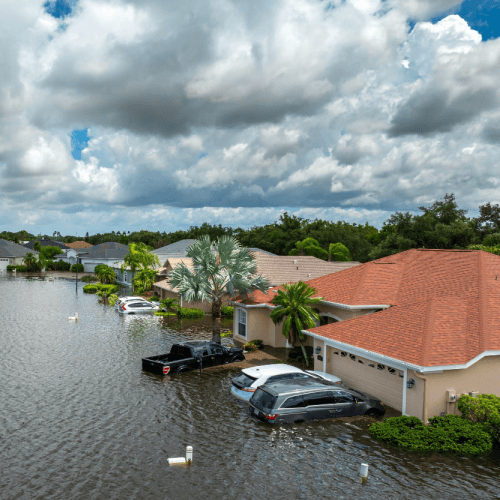
Flooding is not limited to suburbs along the River Murray. Parts of metropolitan Adelaide can also experience flash flooding, particularly in low-lying areas and locations with ageing stormwater infrastructure. If your property is located in a mapped flood zone, you may pay more for home insurance. Even if your property has never experienced flooding, insurers may still assess it as a higher risk based on flood mapping, historical data and future risk modelling.
Bushfire risk
Many parts of South Australia are at risk of bushfires. While areas including the Adelaide Hills, Flinders Ranges, Yorke Peninsula and Kangaroo Island are well known for their bushfire exposure, Adelaide’s fringe suburbs including Flagstaff Hill, Craigburn Farm, Happy Valley, Eden Hills and Beaumont are also at risk of being affected by ember attacks.
Properties in bushfire-prone areas are assigned a Bushfire Attack Level (BAL) rating, which can increase rebuilding costs. Even a lower BAL rating (BAL-19) could add up to around $25,000 to building costs, depending on your home and circumstances, while higher ratings, such as BAL-29 to BAL-40, could potentially add $50,000 or more to construction costs due to the need for fire-resistant building features. In some cases, a high risk score may mean that a standard policy is harder to get. Insurers may also consider factors such as proximity to vegetation, access for emergency services and building materials when calculating premiums.
Home age and condition
SA has many older homes, and periods of heavy rain can expose issues such as ageing roofs, outdated wiring, poor drainage and older plumbing. Living near the coast, whether it’s Semaphore, Glenelg, Moana, Victor Harbor or the Yorke Peninsula, can also affect both property maintenance costs and insurance premiums.
In addition, insurers also consider a range of factors when calculating premiums, such as:
- construction materials used
- additional features like swimming pools and sheds
- owner-occupier or investment property
- compliance with modern building standards.
Your chosen level of cover and excess
Home building insurance generally costs more than contents insurance, while a combined home and contents policy typically costs more than either cover on its own. Adding optional extras can also increase your premium.
Generally, choosing a higher excess can lower your premium, but you’ll need to pay more out of pocket if you make a claim.
The insured amount you choose
The amount you elect for your home building sum insured is the estimated cost to rebuild your home, including any structural improvements on the site; for contents insurance, the sum insured will be the cost to replace all your belongings kept at the site.
Crime risk
According to Australian Bureau of Statistics data, there were 8,789 reported burglaries in SA in 2025, with most occurring at residential properties (74%, or 6,509 burglaries). Properties in areas with higher rates of burglary, theft or vandalism may attract higher home insurance premiums due to the increased likelihood of claims. Installing monitored alarms, security cameras and deadlocks may help reduce your property’s risk profile and potentially lower insurance premiums.
Claims history
Insurers may look at your claims history as an indicator of future risk. The number, type and value of past claims can affect how much you pay. Multiple claims over a short period could result in higher premiums at renewal.
How can I reduce my home insurance premiums?
Home insurance premiums in SA are determined by factors such as your home’s location, claims history, rebuilding costs and exposure to natural disasters such as bushfires and floods. While some factors are outside your control, there are steps you can take that may reduce your premium.
- Consider a higher excess: Choosing a higher excess can reduce your premium, but make sure it’s an amount you could comfortably afford if you ever need to claim.
- Improve your home’s security: Features such as security systems, deadlocks and smoke alarms may be viewed favourably by some insurers because they can reduce the likelihood of a claim.
- Improve your home’s resilience: Resilience upgrades such as using non-combustible building materials, ember-resistant designs, elevating floors above flood levels or installing water-resistant flooring may help reduce the risk of damage. However, before undertaking major upgrades, check with your insurer whether the improvements could affect your premium. Insurers assess risk-reduction measures differently, so any savings aren’t guaranteed.
What does home insurance in SA cover?
Home insurance in SA covers loss or damage to your home and belongings caused by insured events such as bushfires, floods and cyclones. Whether you’re a homeowner, renter or property investor, there are different cover options available for different property types and insurance needs.
Depending on your policy, cover may include damage to your home building, contents or both resulting from the following insured events:
- storm and rainwater damage
- fire and smoke damage
- theft or attempted theft, vandalism or malicious damage
- escape of liquid causing damage
- lightning damage
- explosion damage
- earthquake or tsunami damage
- breakage of glass causing damage.
Optional extras for home insurance
Additionally, you may be able to add some or all of the following optional covers to your policy for an extra cost.
Home building optional extras
- Flood damage
- Accidental damage
- Motor burnout
- Temporary accommodation and removal of debris after severe weather
- Loss of rent/rent default
Contents optional extras
- Loss of or damage to portable contents and personal effects like mobile phones
- Damage to contents while temporarily stored in commercial storage
Many contents insurance policies also offer new-for-old replacement, meaning your insurer may repair or replace an insured item with a similar new item if it’s damaged or stolen.
Always read the relevant PDS and Key Facts Sheet for any insurance policy you’re considering for full details on inclusions, exclusions and annual limits. The Target Market Determination could also guide you on whether a product is right for you.
Choosing home insurance in SA
To choose home insurance in SA, consider the risks that may affect your property, compare policy features and cover levels, and make sure your home, contents or both are insured for an amount that reflects their replacement cost.
Whether you live in a bushfire-prone area such as the Adelaide Hills or a coastal property exposed to severe storms, having the right level of cover can help protect you from the financial impact of unexpected damage and loss.
What is the best home insurance for SA?
There’s no single ‘best’ home insurance policy in SA because the cover you need depends on your property, budget and the risks specific to your location.
When comparing home insurance, consider the risks that may affect your property and look closely at what’s covered, what’s excluded, the coverage limits, excess options and any optional extras that may be relevant.
Using a comparison service such as Compare the Market can help you compare policies from a range of insurers and find cover that suits your needs and circumstances.
Why is home insurance important in SA?
Home insurance is important in SA because it protects homeowners from the potentially high cost of repairing or rebuilding their property and replacing their belongings after an insured event.
Most home insurance policies generally cover insured events such as bushfires, storms, wind damage, hail, lightning and theft. However, cover for natural hazards such as floods, coastal inundation, landslides, land movement and subsidence may be subject to exclusions, limits or optional cover depending on the insurer and policy.
For example, if you live in a flood risk area along the River Murray, such as parts of Murray Bridge and Mannum, flood cover may not automatically be included in your policy and could cost extra to add. Similarly, cover for coastal erosion, landslides, land movement and subsidence is often limited or excluded. While bushfire damage is generally covered, some policies may not cover heat-related damage, such as scorching or melting.
Because cover can differ significantly between providers, it’s important to read the PDS to understand exactly what is covered, what is excluded and whether any limits or conditions could affect a claim.
What happens if I’m underinsured?
If you’re underinsured, your insurance payout won’t be enough to cover the full cost of repairing or rebuilding your home after an insured event. This could leave you responsible for paying some of the costs yourself.
To help avoid underinsurance, review your cover regularly and update your policy after renovations, particularly if you’ve added features such as solar panels, garages and sheds. For strata units, the building is typically covered by strata insurance, but you’ll still need contents insurance for your belongings.
When estimating your sum insured, make sure you consider the full cost of rebuilding, including expenses such as demolition, debris removal and council fees. An online building calculator or a builder can help you estimate these costs. If you’re comparing policies through Compare the Market, our building sum insured calculator can help guide your estimate.
Meet our home and contents expert, Adrian Taylor
As a General Insurance expert with over 13 years’ experience in financial services, Adrian Taylor works to make it easier for homeowners, renters and landlords to protect their home and contents. He believes it’s important for all residents (whether they rent, own or lease) to have adequate financial cover for their property and belongings in case the worse should happen.
Want to know more about home and contents insurance?
1 These figures represent the average annual indicative cost of combined home and contents insurance for customers who compared policies through Compare the Market between 1 July 2025 and 30 June 2026 for properties located in SA. Quote data includes indicative stamp duty and GST where applicable. Premiums have been rounded to the nearest dollar.
2 These figures represent the average annual indicative cost of home building insurance and contents insurance for customers who compared policies through Compare the Market between 1 July 2025 and 30 June 2026 for properties located in SA. Quote data includes indicative stamp duty and GST where applicable. Premiums have been rounded to the nearest dollar.