
Cost of Living by Generation
Key takeaways
- 88% of Australians wanted future generations to enjoy a better quality of life, but 69% believed young people faced a tougher path to financial security; housing affordability was the leading barrier at 48%.
- Australians believed they needed a median $900,000 for a comfortable retirement, yet 47% were not confident they would reach their savings goal; 90% expected to leave an inheritance and 52% had formalised their intentions in a will.
- 40% expected to support children financially into adulthood and 15% expected to support their own parents; 59% of workers were concerned AI could disrupt their career or income, while 22% had used AI to improve productivity at work.


Next generation could be worse-off
Is the Australian dream – a healthy family, a place to live and some spare cash for enjoyment – still achievable in 2026?
Most Australians (88%) say they would like future generations to attain a better quality of life than they did, yet 69% believe young people face a tougher path to achieving such financial security.
Housing affordability was the top barrier, cited by 48% of respondents, followed by the general cost of living (31%).
The great wealth transfer
Despite retirement saving concerns, around 90% of Australians still expect to leave an inheritance. 73% plan to leave at least one property, with 12% planning to leave two or more.
Other common assets intended as bequests include share portfolios (27%) and superannuation savings (47%). Only 10% expect to have cash left to pass on after funding their retirement.
Despite plans to pass on wealth, just 52% had formalised their intentions in a will.
Who’s helping out?
Around 40% of people expect they will need to financially support their children into adulthood, while 8% expect to support their grandchildren. Meanwhile, 15% believe they will need to provide financial support to their own parents.
That support could take different forms, such as help with a property deposit (37%), education expenses (22%), regular cash gifts (23%), rent assistance (17%) or general help with living expenses (46%).
One in nine people (11%) believed they would need financial support from family members at some point.
Hear from Compare the Market's Economic Director, David Koch:
“Younger Australians are being asked to build security in a tougher environment while many families expect to provide support across generations. The discussion needs to transition from the intergenerational wars of ‘Boomers’ this and ‘Gen Z’ that – and try focus on solutions. A good response could be to start early, set realistic goals and build financial capability around housing and our superannuation.”

AI threat remains unclear
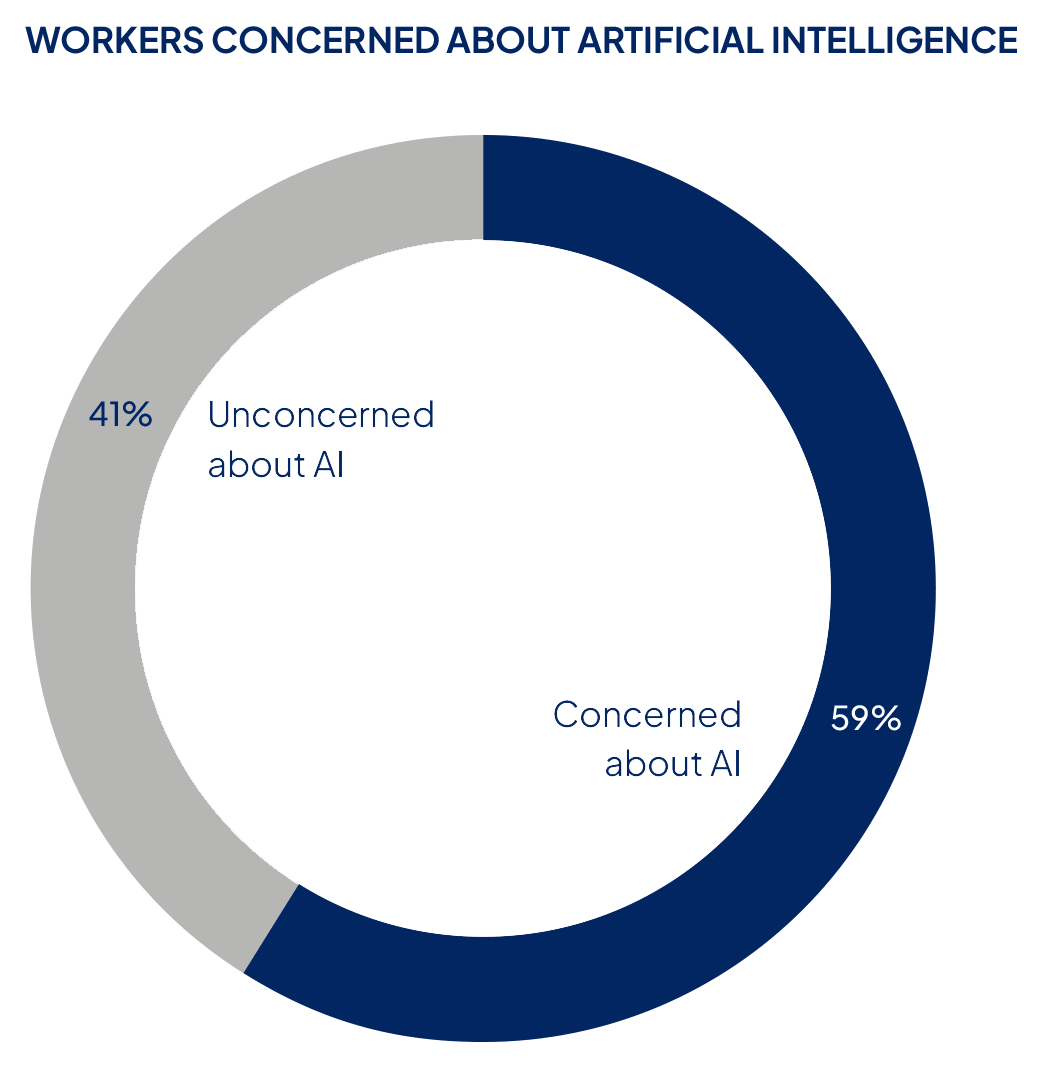 Workers are divided on whether artificial intelligence will disrupt their career or income, with 59% concerned and 41% unconcerned about future implications.
Gen Z workers, who are new to or emerging in the workforce, were the most concerned, with 71% expressing concern, compared with 64% of Millennials and 58% of Gen X.
Regardless, many admit to using AI either in the office or at home.
22% had used AI to boost their productivity at work, 21% had researched products or services, and 13% had used it to support financial decisions.
Around a third (34%) of people said they had not knowingly used any AI tools.