
Debt Regret
A focus on clearing debts
Key takeaways
- 65% of Australians reported having at least one type of debt in 2026, down 8% compared with 2025; credit card use fell from 50% to 41%, and cardholders reported average debt of $4,416.
- 19% said they were in mortgage arrears, rental arrears or behind on bills, while 15% owed money to family, a friend or a colleague.
- 83% had given up, delayed or cut back at least one lifestyle item because of cost-of-living pressure; 33% delayed dental check-ups, 25% car servicing and 25% home repairs.


Buy Now, Pay Later schemes, credit cards and other types of loans continue to help some Aussies navigate the ongoing cost-of-living crisis, with 65% of Australians saying they have one or more type of debt in 2026.
In positive news, the number of Aussies reporting debt was down 8% compared to 2025. The trend suggests many are focusing on paying off old debts rather than taking on new ones.
The most common debt types
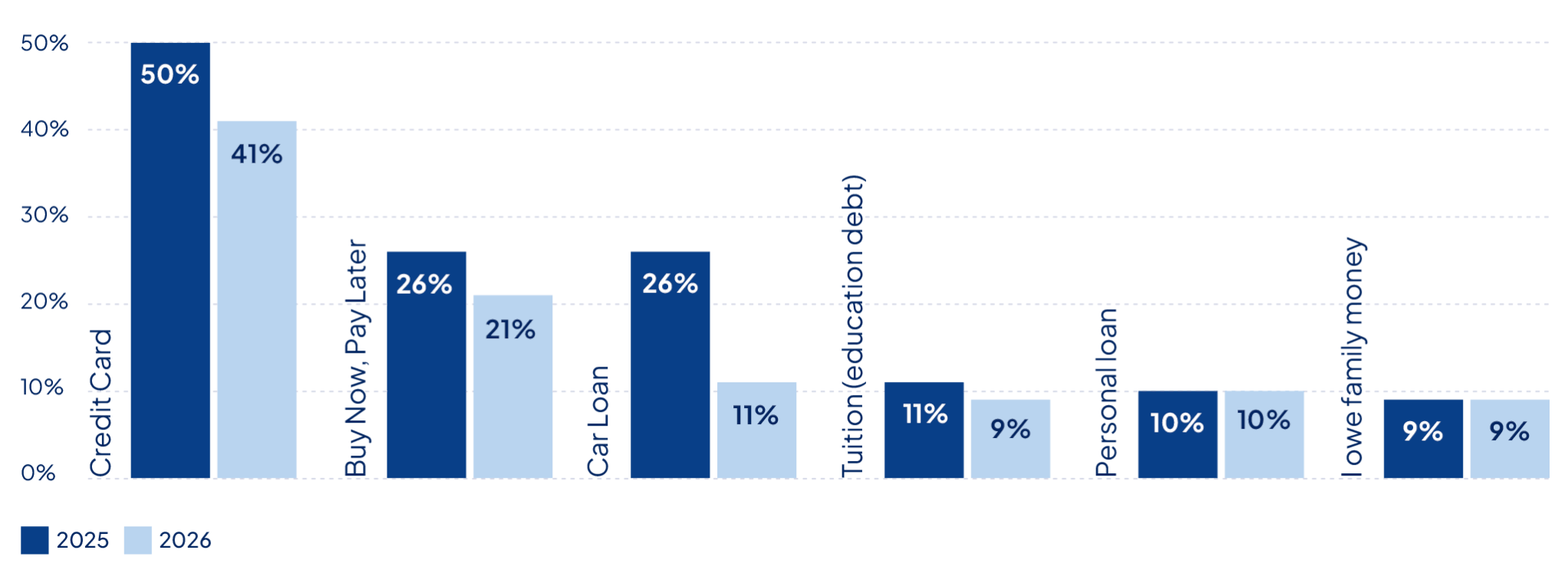
The most common debt types over time in Australia
Debt type
2024
2025
2026
Credit card
41%
50%
41%
Buy Now, Pay Later
18%
26%
21%
Car loan
18%
26%
11%
Tuition (education debt)
9%
11%
9%
Personal loan
9%
10%
10%
I owe family money
9%
9%
9%
Cards still king
While credit cards remain the most common kind of debt in Australia, the number of people using them dropped 9 percentage points in 2026, after spiking to 50% last year.
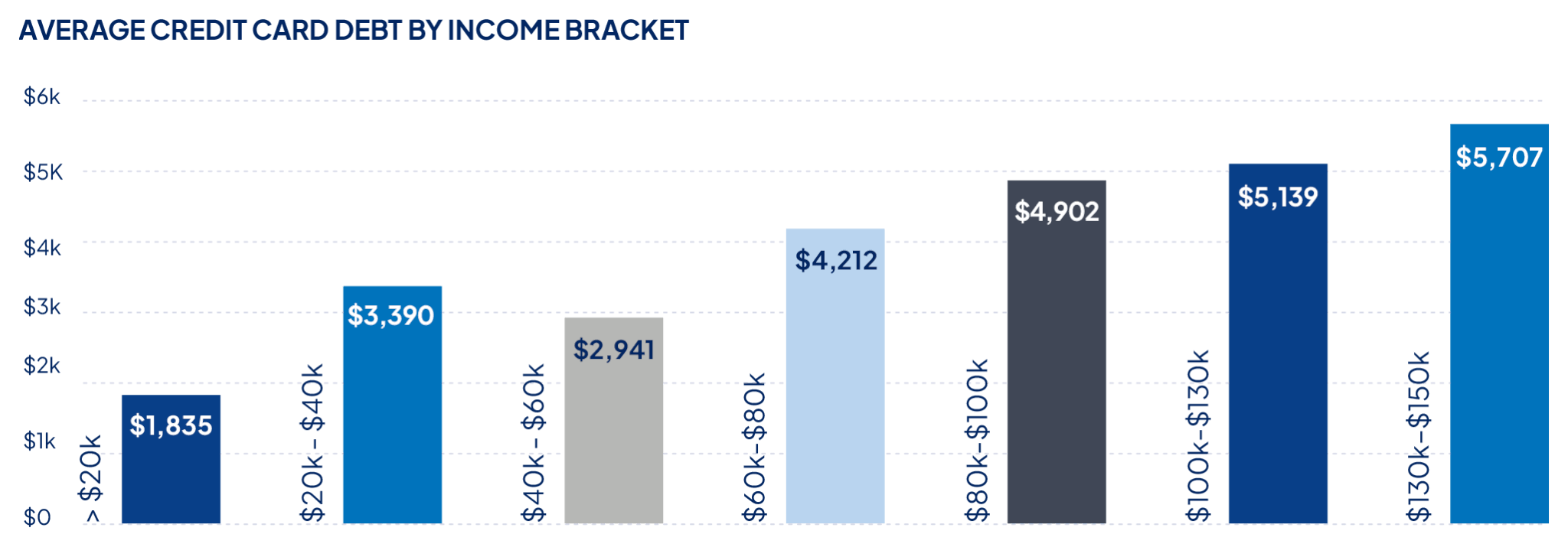
People with a credit card reported an average debt of $4,416.
Higher earners also had larger debts, suggesting a bigger pay packet doesn’t always equate to a smaller credit card balance.
Credit card reliance remains highest for people aged between 55-64 at a rate of 46%, compared to just 24% of Gen Z aged 18 – 24.
Nearly one in five Aussies surveyed (19%) say they’re in mortgage arrears, rental arrears or behind on bill payments, while more than one in 10 Australians (15%) currently owes money to family, a friend or a colleague.
Meanwhile, Buy Now, Pay Later is most prevalent among 25–34-year-olds at 35% – almost double that of 55-64-year-olds (17%).
Average credit card debt by income bracket
Annual income
Average credit card debt
> $20,000
$1,835.44
$20,000 – $39,999
$3,390.53
$40,000 – $59,999
$2,941.36
$60,000 – $79,999
$4,212.75
$80,000 – $99,999
$4,902.79
$100,000 – $129,999
$5,139.44
$130,000 – $149,999
$5,707.86
No (debt) regrets
Two-thirds of Australians say they’re in some type of debt (excluding their home loan), but few are regretful for borrowing money. Just 4% of Australians surveyed say that taking on too much credit card or personal debt is their biggest financial regret.
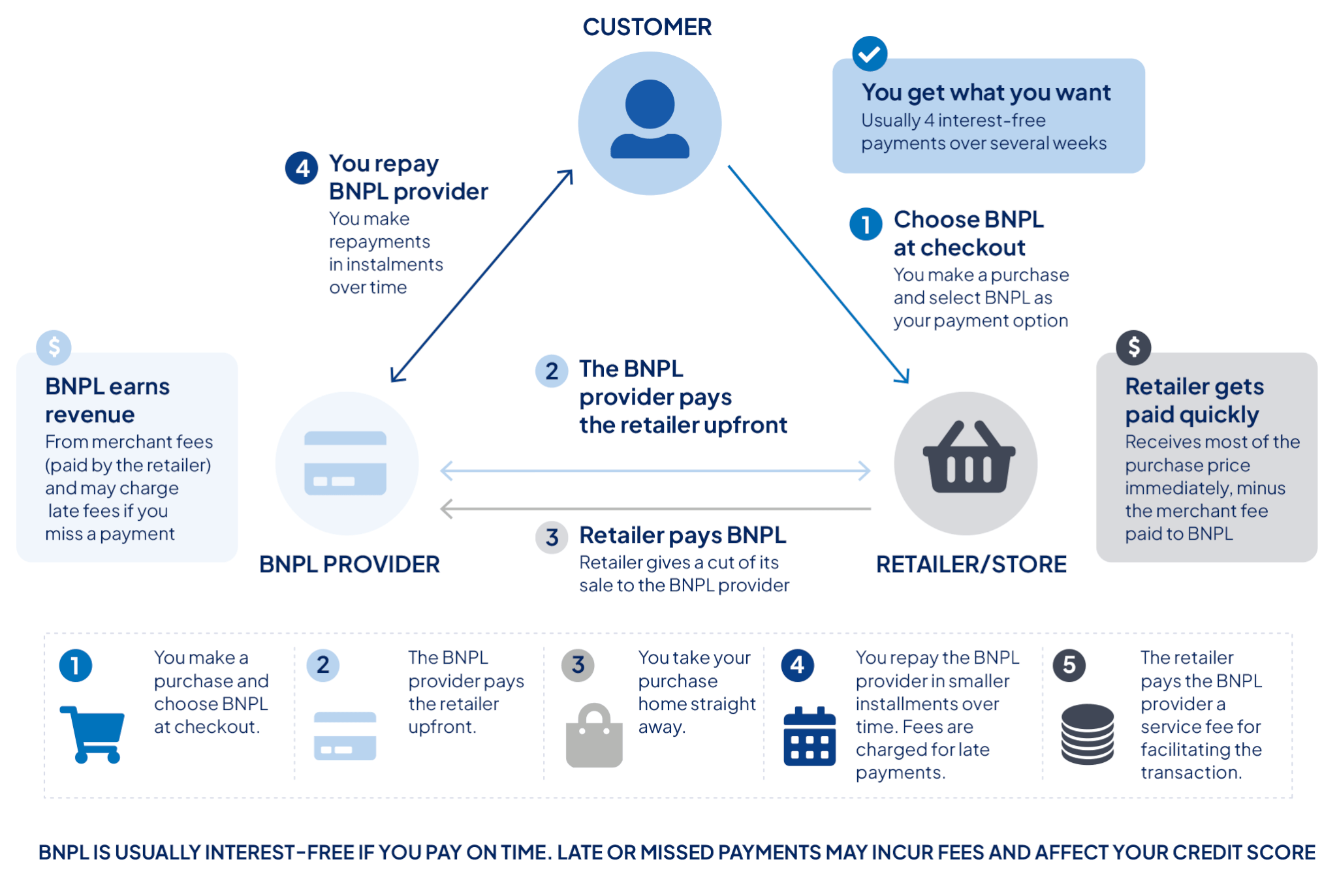
How does Buy Now, Pay Later work?
- You make a purchase and choose BNPL as at checkout.
- The BNPL provider pays the retailer upfront.
- You take your purchase home straight away.
- You repay the BNPL provider in smaller installments over time. Fees are charged for late payments.
- The retailer pays the BNPL provider a service fee for facilitating the transaction.
Cost of lifestyle
When living costs increase, our social lives suffer
As rising costs continue to weigh on Australians, more than four in five people surveyed (83%) say they’ve had to give up, delay or cut back on one or more thing they enjoy in the past 12 months due to cost-of-living pressures. Meals out, holidays, movie trips and hair appointments are increasingly being viewed as luxuries rather than regular expenses.
The biggest lifestyle sacrifices amid the cost-of-living crisis
- Dining out: 56%
- Holidays: 41%
- Going to the movies: 38%
- Hair appointments: 30%
- Socialising with friends: 28%
- Alcohol: 26%
- Live music events: 24%
- Coffee: 23%
- Beauty appointments: 21%
- Gym membership: 18%
- Recreational sport: 10%
Non-luxuries are also taking a hit
- Dental check-ups: 33%
- Car servicing: 25%
- Home repairs: 25%
- Replacing broken items: 21%
- GP visits: 20%
- Routine health appointments: 14%
- Vet visits: 10%
- Elective surgery: 6%
Hear from Compare the Market's Economic Director, David Koch:
“The encouraging sign is that fewer people reported debt, but many households are still using credit or falling behind as living costs squeeze the essentials and the things that make life enjoyable. Prioritise high-cost debt, avoid treating Buy Now, Pay Later as free money, and seek early help if repayments or bills are becoming unmanageable.”

Small bill changes can add up to big savings
Before sacrificing holidays, meals out or family entertainment, it may be worth reviewing the bills you already pay to see if there is room to save.
Compare the Market’s recent ‘Bill Challenge‘, which aired on Channel 7’s ‘Your Money and Your Life’, found young couple Bevan and Kelly could reduce their bills by almost $1,900 a year, by making simple changes to their home loan, electricity, gas and insurance arrangements.
The potential savings came from shopping around, avoiding the loyalty tax and reviewing whether each plan or policy still represented good value.
For Bevan and Kelly, the following potential changes were:
- Home loan: Around $650 in annual reduction, assuming interest rates stay steady, by switching to a home loan with a lower interest rate
- Electricity: Around $360 in annual reductions by switching to another plan available on the market
- Gas: Approximately $440 a year in potential savings by switching to an alternative plan with a lower supply charge and sign-up credit
- Car insurance: $150 slashed by moving one car to a comparable policy and $120 up for grabs for a second car just by switching providers or adjusting how the premium is structured.