The Rising Cost of Health Insurance in Australia
The price of loyalty
Key takeaways:
- Australians with private health insurance reported spending an average of $2,713.53 a year, or $226.13 a month, on hospital, extras or combined cover.
- The industry average private health insurance premium increase was 4.41% on 1 April 2026, the largest annual rise since 2017; cumulative industry average increases over the decade totalled 34.47%.
- Respondents with the same health insurer for 10 years or more reported average annual premiums of $3,414.23, compared with $2,224.34 among those who had held cover for one year, although differences in cover and healthcare needs may contribute.


Health insurance costs per state
Australians surveyed told us they spend an average of $2,713.53 a year on health insurance. This could be a hospital policy, an extras policy or a combined hospital and extras policy. It equates to an average of $52.18 each week and $226.13 each month.
Queenslanders spend the most annually on their private health insurance – $333 above the national average.
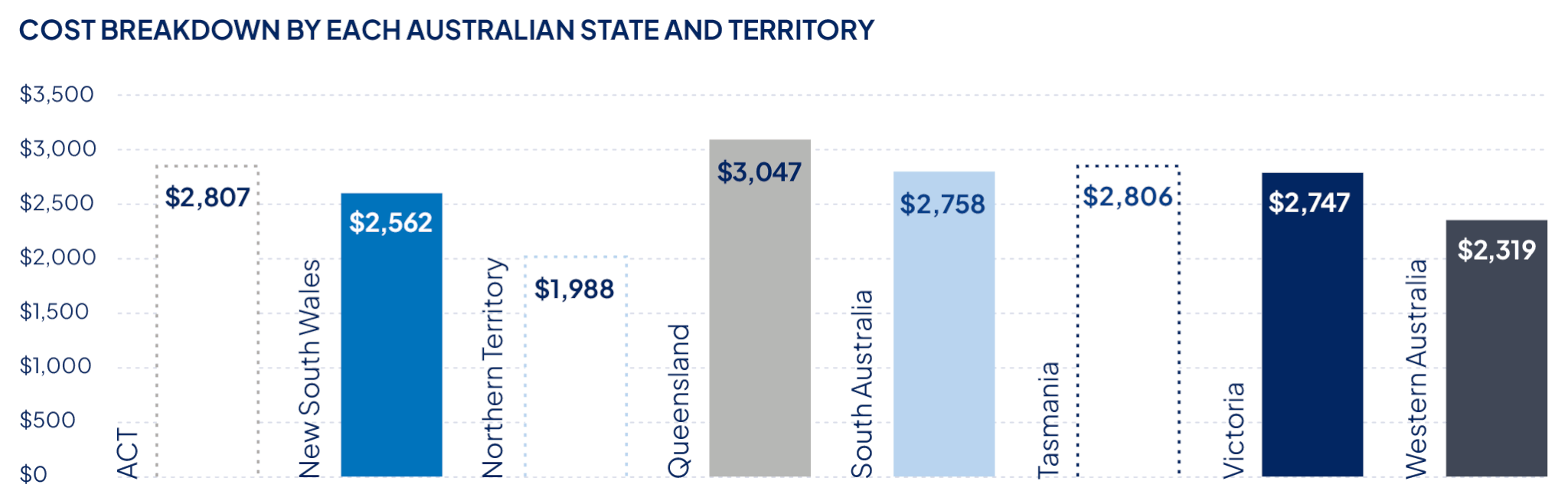
Cost breakdown by each Australian state and territory
| State | Cost of health insurance |
|---|---|
| ACT | $2,807 |
| NSW | $2,562 |
| NT | $1,988 |
| QLD | $3,047 |
| SA | $2,758 |
| TAS | $2,806 |
| VIC | $2,747 |
| WA | $2,319 |
Loyalty could be costing Australians big time
Health insurance attracts some of the strongest customer loyalty, with 27% of Australians surveyed saying they’ve stayed with the same private health provider for at least a decade.
Australians who have stayed with the same health insurance provider for 10 years or more pay an average of $3,414.23 in annual premiums.
On the flipside, those surveyed who had only had cover for a year paid an average of $2,224.34 a year.
That’s an annual average premium difference of $1,189.89, or 53.49%. This represents a sizeable difference between what respondents who have been with the same provider for a decade or more reported paying annually on average, and what those who have recently taken out cover have told us they pay.
There may be a number of reasons why people who have been on the same policy for an extended period pay more. For example, they may have more complex health needs therefore require higher levels of cover, be paying for benefits they no longer require, or have not reviewed offers and alternative policies available. For those respondents who told us they hold a health insurance policy, regularly reviewing the relevant policy benefits against their healthcare needs and shopping around to compare policies may help them identify opportunities to reduce their premiums.
What’s stopping Aussies from shopping around?
Just 28% of Australians say they’ve shopped around for private health insurance in the past 12 months – less than people who have searched for car insurance (43%), energy deals (36%) and home and contents insurance (32%).
Older Australians aged 55-64 are the least likely to switch, at a rate of 22% compared to 36% of Millennials aged between 35-44.
Rebate debate
At the time of publication, a proposal to reduce private health insurance rebates for Australians aged 65 and over had been reintroduced to Parliament after earlier legislation was blocked in the Senate. The debate highlights the challenge facing policymakers as Australia ages: how to fund growing aged care and health service demands while balancing costs fairly between generations.
Biggest hike in nine years
In 2026, Australians experienced the biggest round of health insurance increases since 2017, with the industry average increasing 4.41% on 1 April 2026. This figure is a weighted average across all policies and health funds. While some policies saw larger increases, others rose by less, and some remained unchanged or even decreased.
Over the last decade, the industry average premium increases have totalled 34.47%.
To demonstrate what this looks like in real dollar terms, for a person paying an annual premium of $1,500 in 2017 whose premium increased by the industry average each year, here’s how their premiums would have increased year on year:
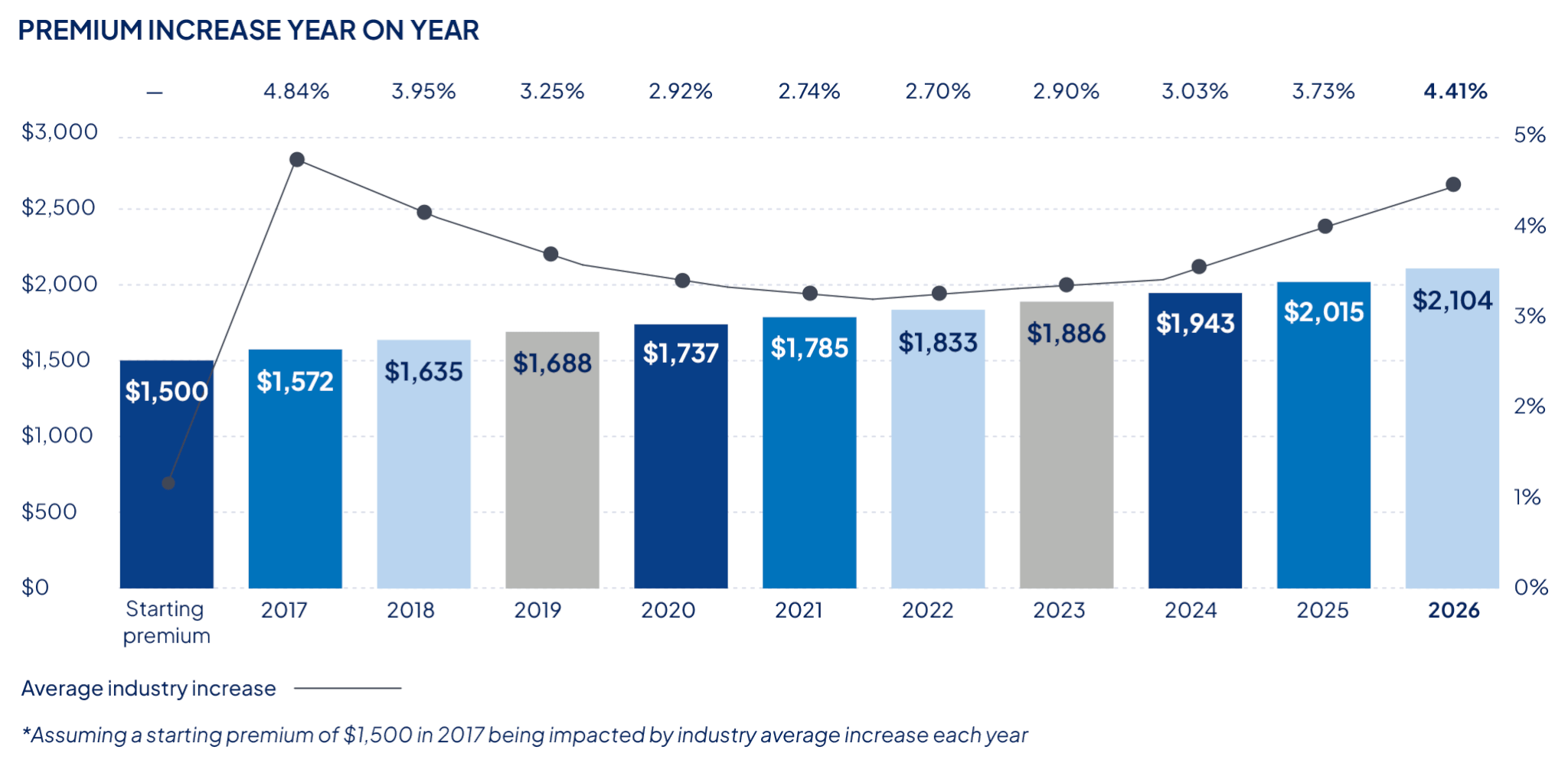
Premium increase year on year
| Year | Industry average increase | Annual premium, assuming a starting premium of $1,500 in 2017 being impacted by industry average increase each year |
|---|---|---|
| Starting premium | — | $1,500 |
| 2017 | 4.84% | $1,572 |
| 2018 | 3.95% | $1,634 |
| 2019 | 3.25% | $1,687 |
| 2020 | 2.92% | $1,737 |
| 2021 | 2.74% | $1,784 |
| 2022 | 2.70% | $1,832 |
| 2023 | 2.90% | $1,886 |
| 2024 | 3.03% | $1,943 |
| 2025 | 3.73% | $2,015 |
| 2026 | 4.41% | $2,104 |
*Assuming a starting premium of $1,500 in 2017 being impacted by industry average increase each year.
Why do premiums keep increasing?
A range of factors can contribute to premium increases, including:
- Rising costs for medical treatments, hospital stays and specialist services.
- Advances in medical technology and equipment, which can improve care but often come with higher costs.
- Growing demand for complex and expensive procedures performed in private hospitals.
- An increase in the number and value of health insurance claims made by members.
Hear from Compare the Market's Executive General Manager of Health, Steven Spicer:
“The cheapest policy is not necessarily the right policy, but paying for cover that no longer matches your needs can be just as costly. Review the benefits you use, the excess you could comfortably afford and the alternatives available, rather than assuming a long relationship with one fund guarantees the best value.”