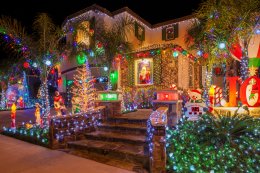

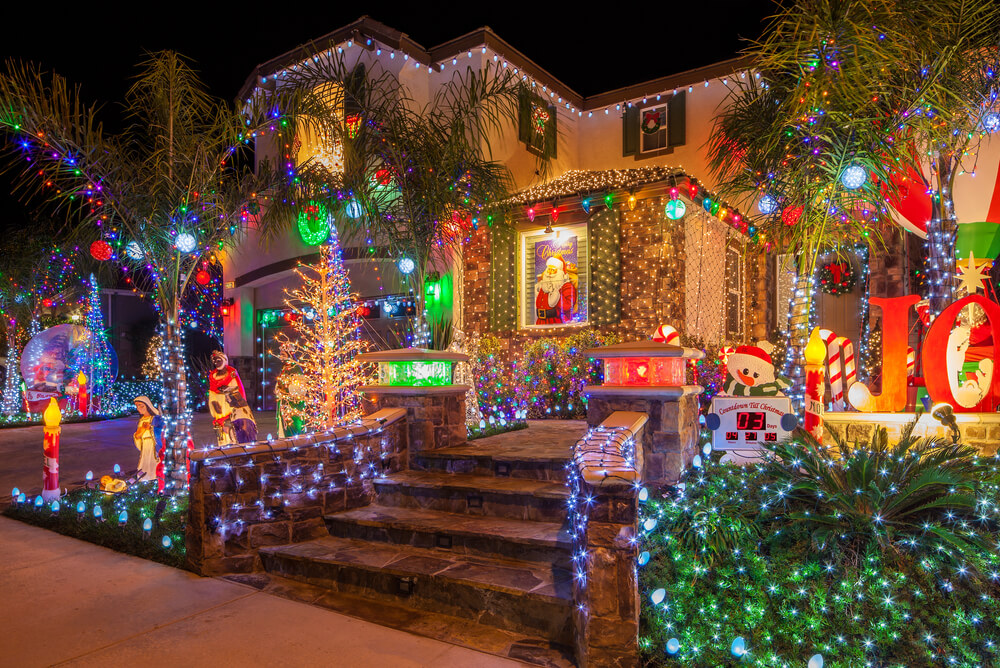
Many Australians plan to pull the plug on a beloved Christmas tradition this year, with new research from Compare the Market revealing that almost six in 10 people (59%) won’t hang Christmas lights in 2026.*
But households concerned about a seasonal surge in their energy bills may be pleasantly surprised. New Compare the Market analysis found that running as many as 500 LED Christmas lights could cost around $2 a night, or less than $65 across December in some regions.
Compare the Market’s new research found that 44% of Australians surveyed said they never hang Christmas lights, 8% would ditch the tradition this year because of costs and a further 7% believed they wouldn’t have time to deck the halls.
Meanwhile, 14% said they would hang fewer lights to save money and the same number would switch to more energy-efficient lights or solar options.
Just 12% of Aussies surveyed said they’ll hang the same number of lights in 2026, with only 1% going all out and hanging more lights than previous years.
| State | % who won’t hang Christmas lights in 2026 |
| QLD | 61% |
| WA | 50% |
| SA | 60% |
| NSW | 55% |
| VIC | 58% |
Compare the Market spokesperson Chris Ford said while household energy bills often climb over summer, Christmas lights were unlikely to be the biggest power guzzlers around the home.
“Despite what all the scrooges out there say, Christmas lights probably aren’t the biggest bill blowers we think they are during the festive period,” Mr Ford said.
“Modern LED lights can be surprisingly affordable to run, so there’s no need to put Christmas cheer on the chopping block if cost is your biggest concern.
“The old incandescent lights tangled up in the garage may be a different story. They use much more electricity than the LED and solar options available today, so it might be time to put them on the naughty list and upgrade to something more energy-efficient.
“Solar lights don’t draw any electricity from the grid, while LEDs generally have a relatively low upfront cost and are much more energy-efficient than old incandescent lights. You can still light up the neighbourhood without giving yourself a nasty present when the next power bill arrives.”
If you’d rather not receive high electricity bills this Christmas, Mr Ford suggested turning your attention to the home’s bigger power guzzlers.
“Air conditioning is one of the obvious culprits. Each degree colder you set the temperature can increase electricity usage by as much as 10%, so aim for somewhere between 25 and 27°C and keep the windows and doors closed.
“Appliances left charging or sitting on standby can also quietly add to your bill. Phantom power can suck as much as $100 from your wallet each year, which is worth watching if Santa has delivered even more screens and devices to the household.
“The spare fridge or freezer may also be working overtime during the Christmas period, but older models could be chewing through much more electricity than you realise. A fridge from a couple of decades ago that carried a five-star energy rating would only achieve around two or three stars by today’s standards.”
And if you live in one of the four million Aussie homes with solar, Mr Ford said the trick is to use your system during the day, when the sun is shining.
“Run energy-intensive appliances such as the washing machine, dryer and dishwasher during the day, when your panels are generating electricity,” Mr Ford said. “Smart timers can take the hassle out of it by letting you set and forget. If you have a solar battery, you can also store excess electricity generated during the day and use it at night, when household demand is often higher. It’s generally better value to use the electricity your system produces than to export it to the grid.
“And before you wrap up your Christmas to-do list, check whether your electricity plan is still competitive. The ‘better offer’ message on your bill is a good place to start, but it may also be worth comparing plans to see what else is available.”
New South Wales
| Number of lights | Wattage | Estimated cost per hour | Estimated cost per night | Estimated cost month of Dec |
| 25 | 1.35 | $0.05 | $0.20 | $6.19 |
| 100 | 3.6 | $0.13 | $0.53 | $16.52 |
| 200 | 6 | $0.22 | $0.89 | $27.53 |
| 500 | 12 | $0.44 | $1.78 | $55.06 |
VICTORIA
| Number of lights | Wattage | Estimated cost per hour | Estimated cost per night | Estimated cost month of Dec |
| 25 | 1.35 | $0.04 | $0.17 | $5.36 |
| 100 | 3.6 | $0.12 | $0.46 | $14.28 |
| 200 | 6 | $0.19 | $0.77 | $23.81 |
| 500 | 12 | $0.38 | $1.54 | $47.62 |
QUEENSLAND
| Number of lights | Wattage | Estimated cost per hour | Estimated cost per night | Estimated cost month of Dec |
| 25 | 1.35 | $0.05 | $0.18 | $5.69 |
| 100 | 3.4 | $0.12 | $0.46 | $14.33 |
| 200 | 6 | $0.20 | $0.82 | $25.30 |
| 500 | 12 | $0.41 | $1.63 | $50.59 |
SOUTH AUSTRALIA
| Number of lights | Wattage | Estimated cost per hour | Estimated cost per night | Estimated cost month of Dec |
| 25 | 1.35 | $0.057 | $0.24 | $7.44 |
| 100 | 3.4 | $0.143 | $0.57 | $17.71 |
| 200 | 6 | $0.252 | $1.01 | $31.25 |
| 500 | 12 | $0.504 | $2.02 | $62.50 |
*Survey of 1,010 Australian adults, conducted October 2026.
Guide only. Actual costs will vary depending on factors like the type of lights, number of lights used, electricity plan and location. Per month cost estimated based on running lights for four hours per night, every night for 31 days of December.
NSW: Based on a house in Sydney (2000), assuming a flat rate electricity usage tariff of 37c/kWh (outlined on p29 of AEMC NSW – Residential Electricity Price Outlook).
VIC: Based on a house in Melbourne (3000), assuming a flat rate electricity usage tariff of 32/kWh (outlined on p32 of AEMC’s VIC – Residential Electricity Price Outlook)
QLD: Based on a house in Brisbane (4000), assuming a flat rate electricity usage tariff of 34c/kWh (outlined on p28 of AEMC QLD- Residential Electricity Price Outlook)
SA: Based on a house in Adelaide (5000), assuming a flat rate electricity usage tariff of 42c/kWh (outlined on p31 of AEMC’s SA – Residential Electricity Price Outlook)